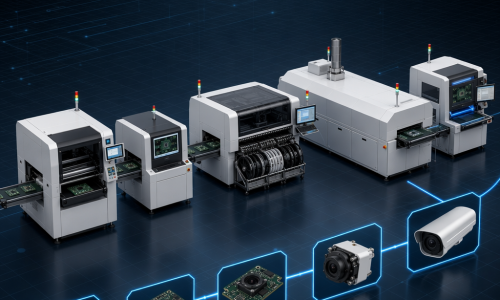
Standing on the floor of a high-volume assembly plant, one is struck by the rhythmic, almost musical cadence of the placement heads. It is a dance of sub-millimeter precision, where thousands of components find their home on a circuit board every hour. Yet, this entire symphony is vulnerable to the smallest of hiccups—a worn-out nozzle, a jammed feeder, or a fatigued motor. According to recent data from Statista, the Global Electronics Manufacturing Services (EMS) market is projected to reach approximately $850 billion by 2028, reflecting an intense pressure for continuous uptime. Furthermore, a study published in the Journal of Manufacturing Processes emphasizes that even a 1% increase in machine efficiency can lead to millions in annual savings for large-scale operations. We write this guide to bridge the gap between technical necessity and procurement strategy, exploring how specialized SMT spare parts are the silent guardians of your bottom line.

Understanding the Lifecycle of Critical SMT Components
The core of any SMT placement machine lies in its ability to maintain repeatability under high thermal and mechanical stress. Spare parts are generally categorized into three distinct tiers: consumables, semi-permanent mechanical assemblies, and high-value electronics.
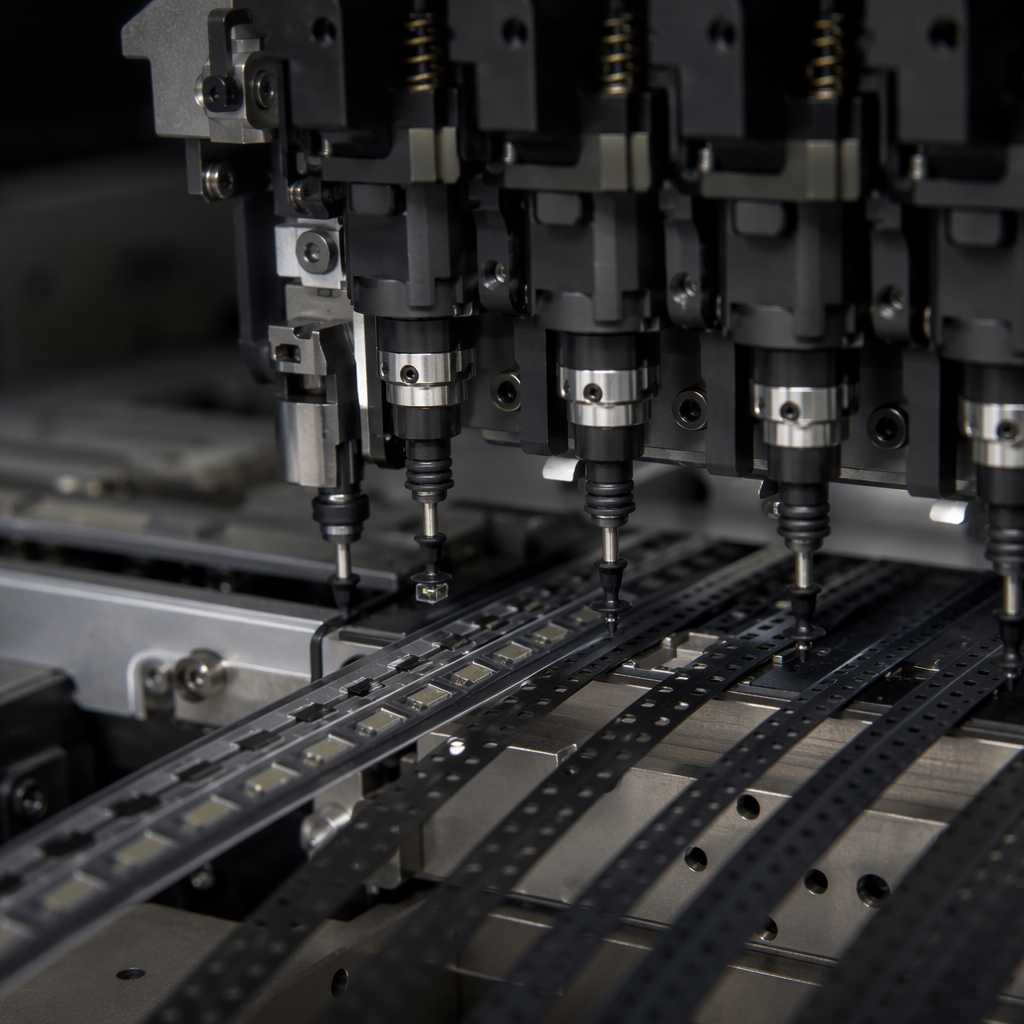
Consumables, such as nozzles and filters, bear the brunt of every placement cycle. A nozzle for a high-speed Fuji or Juki machine might perform over 50,000 “picks” in a single shift. The material composition here—whether it be tungsten carbide, technical ceramics, or specialized anti-static polymers—dictates the wear rate. A microscopic chip in a nozzle tip, invisible to the naked eye, can cause a drop in vacuum pressure, leading to component misalignment or “tombstoning” during reflow.
The Technical Anatomy of Precision Nozzles
When we discuss nozzle inspection, we are looking at two primary factors: bore integrity and tip surface energy. In modern high-density boards (01005 or 008004 components), the nozzle tip must be perfectly flat to ensure a 100% vacuum seal. Any deviation in the ceramic coating can lead to static buildup, causing components to stick to the nozzle even after the vacuum is released.
Industry standards dictate that high-wear nozzles should be ultrasonically cleaned every 24-48 hours and inspected under 50x magnification. The use of “Diamond-Like Carbon” (DLC) coatings on aftermarket nozzles has emerged as a high-value trend, offering hardness levels that often exceed OEM specifications while providing better component release properties.
OEM vs. Aftermarket: The Procurement Dilemma
One of the most debated topics in the industry is the choice between Original Equipment Manufacturer (OEM) parts and high-quality aftermarket alternatives. This choice is no longer binary; it is a spectrum of risk and reward.
“In the early 2000s, the choice was simple: you bought OEM or you risked your machine’s warranty,” notes an industry veteran with over 30 years in SMT maintenance. “Today, the landscape has shifted. High-end aftermarket manufacturers use the same CNC tolerances and material grades as the OEMs. The real challenge for procurement isn’t just the price tag; it’s verifying the material certification and the precision of the vacuum seal. We’ve seen aftermarket feeders that actually outlast the originals because they were redesigned to address a specific gear-wear weakness known in the OEM model.”
Comparing SMT Sourcing Strategies
| Feature | OEM Spare Parts | Premium Aftermarket Parts | Stockroom Surplus |
|---|---|---|---|
| Tolerance Precision | Guaranteed (±0.01mm) | High Quality (±0.02mm) | Variable |
| Material Integrity | Proprietary Alloys | Matching Industry Standards | OEM Original |
| Supply Chain Speed | Often 2-4 Weeks | 2-5 Days (Distributor Stock) | Instant (If available) |
| Cost Basis | High (Brand Premium) | Optimized (30-60% Savings) | Low (Liquidation) |
| Warranty Support | Full Factory Support | Distributor-Backed | None/Limited |
| Best Application | Critical Motors, PCBs | Feeders, Nozzles, Filters | Replacement Frames |
Critical Scene: The Role of Feeders in Line Efficiency
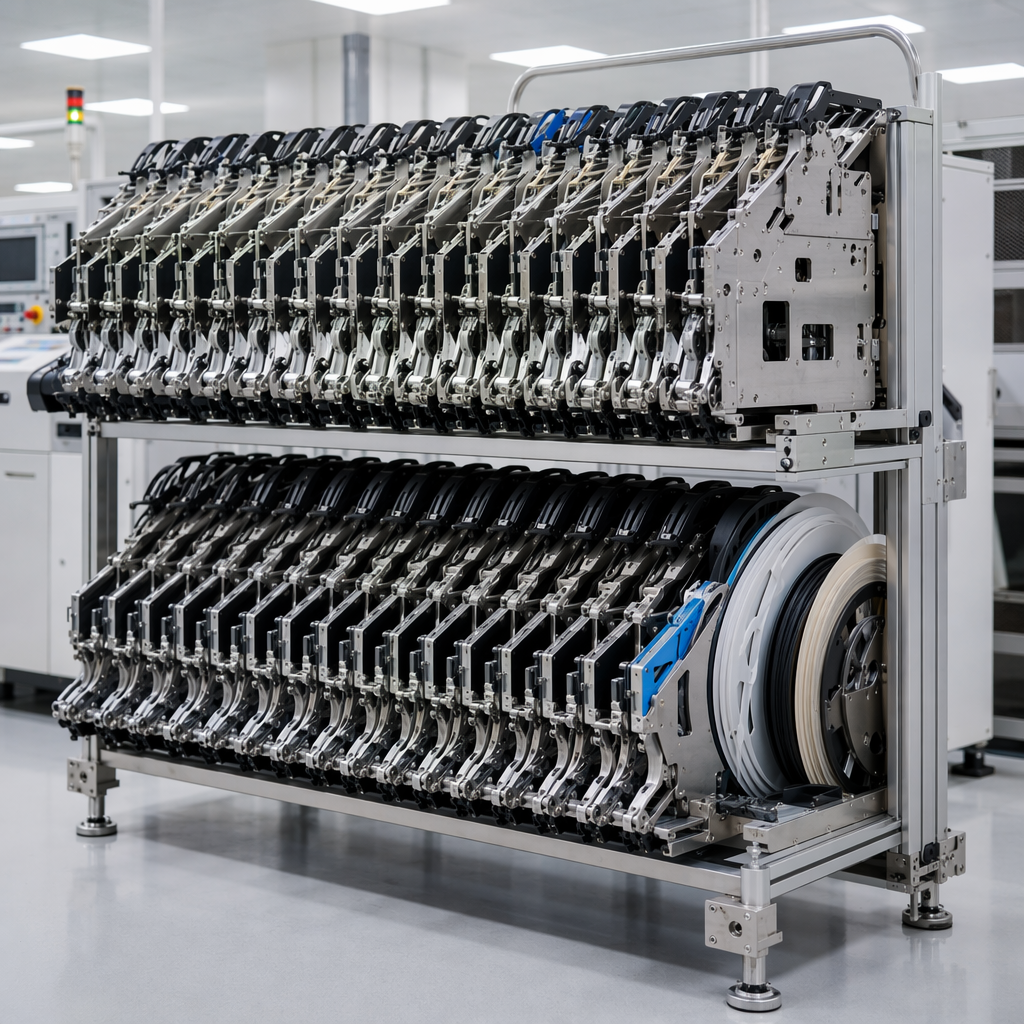
If the placement head is the brain, the feeder maintenance program is the circulatory system. An 8mm feeder for a Yamaha or Panasonic line is a marvel of miniaturized engineering. It must advance tape with micron-level consistency while maintaining perfect tension.
When selecting feeders, engineers must prioritize the drive mechanism. Older pneumatic feeders are increasingly being replaced by intelligent electric feeders. These digital units allow for programmable pitch adjustment and provide real-time feedback to the machine controller regarding tape status. This integration significantly reduces the “hidden” downtime associated with manual pitch adjustments during product changeovers.
Brand-Specific Considerations: Juki, Fuji, and Yamaha
Each major platform has its own unique spare parts ecosystem:
- Juki Systems: Known for their longevity, Juki machines often require specific laser-sensor maintenance parts. The laser sensor in the head is the most critical component; using non-certified cables here can lead to intermittent signal loss.
- Fuji NXT/AIMEX: The modularity of Fuji systems makes feeder maintenance even more critical. The communication pins on the feeder base are a common failure point due to dust accumulation.
- Yamaha Z:LEX: These high-speed machines demand ultra-lightweight nozzles. The weight of the nozzle directly impacts the inertia of the head, and thus the maximum placement speed.
Deep Dive: Technical Material Specifications for Nozzles and Filters
The performance of an SMT line is often limited by the material science of its smallest parts. For high-speed nozzle inspection and longevity, manufacturers are moving toward advanced composite materials.
Material Selection Matrix
- Tungsten Carbide: The industry standard for nozzle bodies due to its extreme hardness and resistance to deformation under vacuum pressure.
- Black Ceramics: Often used for the nozzle tip to provide a non-reflective surface, which is essential for the machine’s vision system to accurately recognize small components like 0201s.
- ESD-Safe Polymers: Critical for nozzles handling sensitive semiconductors. These materials ensure that static charges are safely dissipated through the machine’s grounding system rather than through the component.
- Sintered Metal Filters: Used in the vacuum lines to prevent solder paste dust and flux fumes from entering the expensive vacuum pumps.
The SMT Maintenance Master Checklist: A Preventative Strategy
To maximize the ROI of your SMT placement machine spare parts, a structured PM (Preventative Maintenance) schedule is non-negotiable.
Daily Checkpoints (Shift Start)
- Vacuum Filter Inspection: Check for visible debris in the head filters.
- Nozzle Tip Cleaning: Use specialized cleaning solutions to remove flux residue.
- Feeder Tension Check: Ensure tape advancement is smooth and without “clicks.”
Weekly Maintenance Tasks
- Laser Sensor Calibration: Clean the lens of the component recognition system.
- X/Y Axis Lubrication: Use manufacturer-approved grease to prevent motor strain.
- Vacuum Pump Verification: Measure the negative pressure at the head to ensure it meets the minimum spec (typically -80kPa).
Monthly Deep Audit
- Feeder Calibration: Use a feeder calibration jig to verify the X/Y positioning of every feeder in the rack.
- Belt Tension Adjustment: Inspect all drive belts for fraying or loss of tension.
- Electrical Connector Cleanup: Use contact cleaner on all feeder-to-machine interfaces.
Shopping Recommendation: The High-Precision 8mm Electric Feeder (Compatible Series)
- Why we recommend it: Unlike pneumatic versions, electric feeders offer programmable pitch and smoother tape advancement, reducing component “jumping” at high speeds.
- Target Application: High-density PCBs where component pitch is 0.5mm or less.
- ROI Factor: Reduced scrap rate often covers the part cost within the first 500 operating hours.
Maintenance Protocols and the Human Element
User feedback from production managers in the US Midwest suggests that the biggest “hidden” cost of spare parts isn’t the purchase price, but the installation error. A reflow oven parts failure, such as a heating element or a fan motor, is often caused by accumulated flux residue that wasn’t cleaned during standard PM (Preventative Maintenance).
“We found that our nozzle wear was 30% higher than the manufacturer’s spec,” reported a Lead Technician at a Tier-2 EMS provider. “After investigating, we realized our nozzle inspection camera was slightly out of calibration, causing the head to ‘over-travel’ and strike the components with too much force. The parts weren’t the problem; the setup was. This taught us that spare parts are only as good as the calibration of the machine they are installed in.”

The Economic Impact of Downtime (TCO Analysis)
Total Cost of Ownership (TCO) for SMT spare parts must include:
- Acquisition Cost: The invoice price.
- Lifecycle Cost: How many cycles does the part last?
- Downtime Cost: $500 – $5,000 per hour depending on the line.
- Yield Cost: The value of boards scrapped due to part failure.
By using high-quality aftermarket nozzles and filters, a factory can reduce its acquisition costs by 40% while maintaining the same lifecycle performance. This “saved” capital can then be reinvested into higher-value OEM electronics or predictive maintenance software.
The Future of SMT Sourcing: Digital Inventories and AI
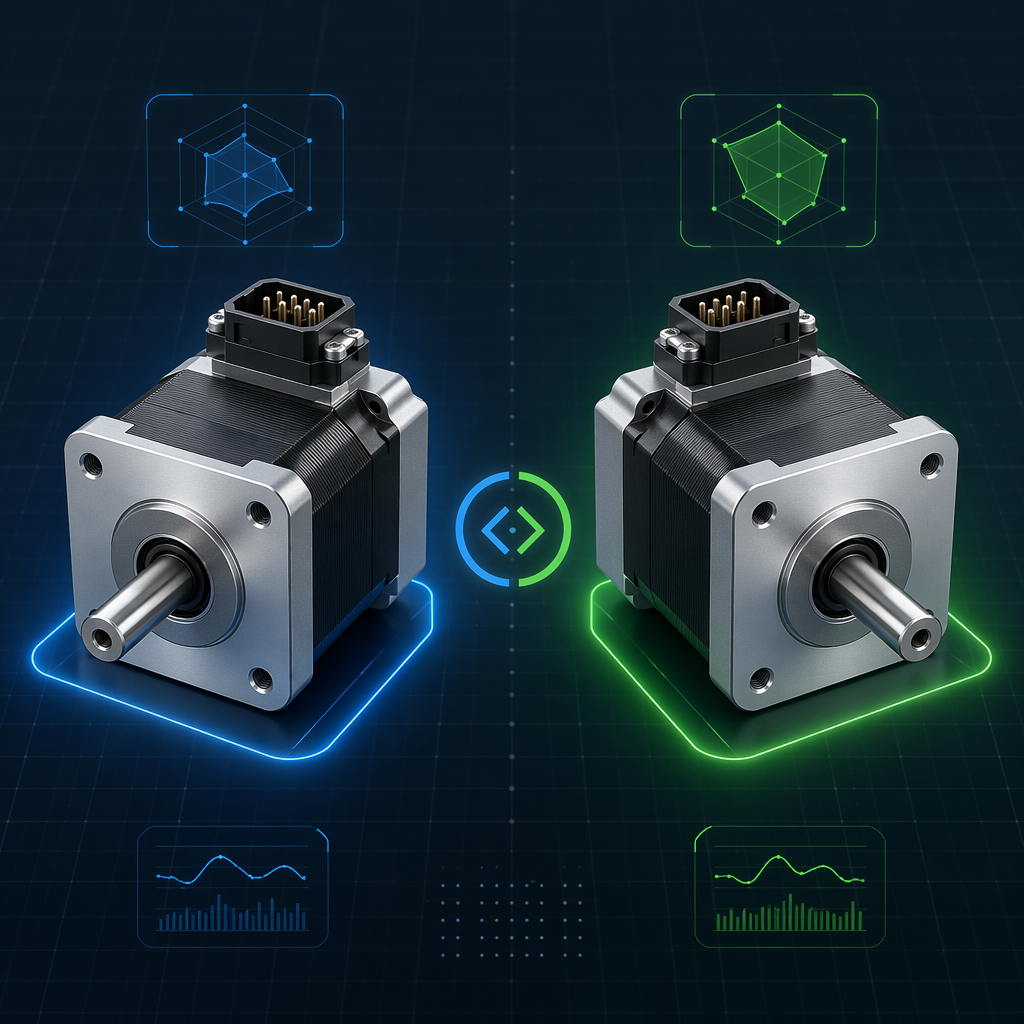
The next frontier in SMT parts management is the integration of IoT-enabled sensors that track the performance of every motor and vacuum valve. Future SMT placement machine systems will likely “self-order” their own spare parts before a failure occurs. Imagine a machine that detects a 5% drop in vacuum efficiency and automatically triggers a procurement request for a new set of filters and nozzles from a pre-approved global supplier.
For now, the best strategy remains a hybrid approach:
- Strategic Stockpiling: Maintain a “Critical Spares” kit on-site for high-wear items like splicing tapes and standard nozzles.
- Vendor Diversification: Establish a relationship with a high-quality aftermarket distributor to buffer against OEM supply chain delays.
- Data-Driven PM: Implement a rigorous schedule that treats every spare part as a strategic investment rather than a reactive expense.
By focusing on quality and compatibility rather than just the lowest bid, manufacturers can ensure that their symphonies of precision continue to play without interruption, securing their place in the competitive global market.