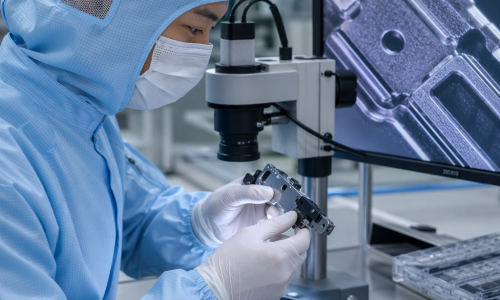
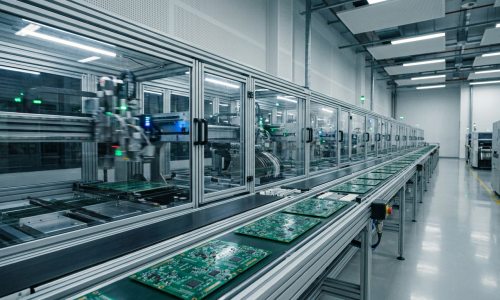
Walking through a Tier-1 electronics facility today, the silence of a modern SMT production line is a stark contrast to the mechanical roar of decades past. The shift from analog CCTV to high-definition Power over Ethernet (PoE) IP cameras has fundamentally redefined the requirements of the assembly floor. According to Grand View Research, the global IP camera market is expected to grow at a CAGR of 13.9% through 2030, driven largely by advancements in PoE technology that allow for simplified, single-cable installations. However, for the manufacturer, this “simplicity” on the consumer end translates to significant complexity on the PCB. The integration of high-speed image sensors, PoE power management ICs, and robust networking components onto a compact module demands a level of precision that traditional SMT lines struggle to meet. This article explores the critical parameters for choosing a production line that ensures high yield and long-term reliability for the next generation of security modules.

The Precision Mandate: Handling CMOS Sensors and Dense Optics
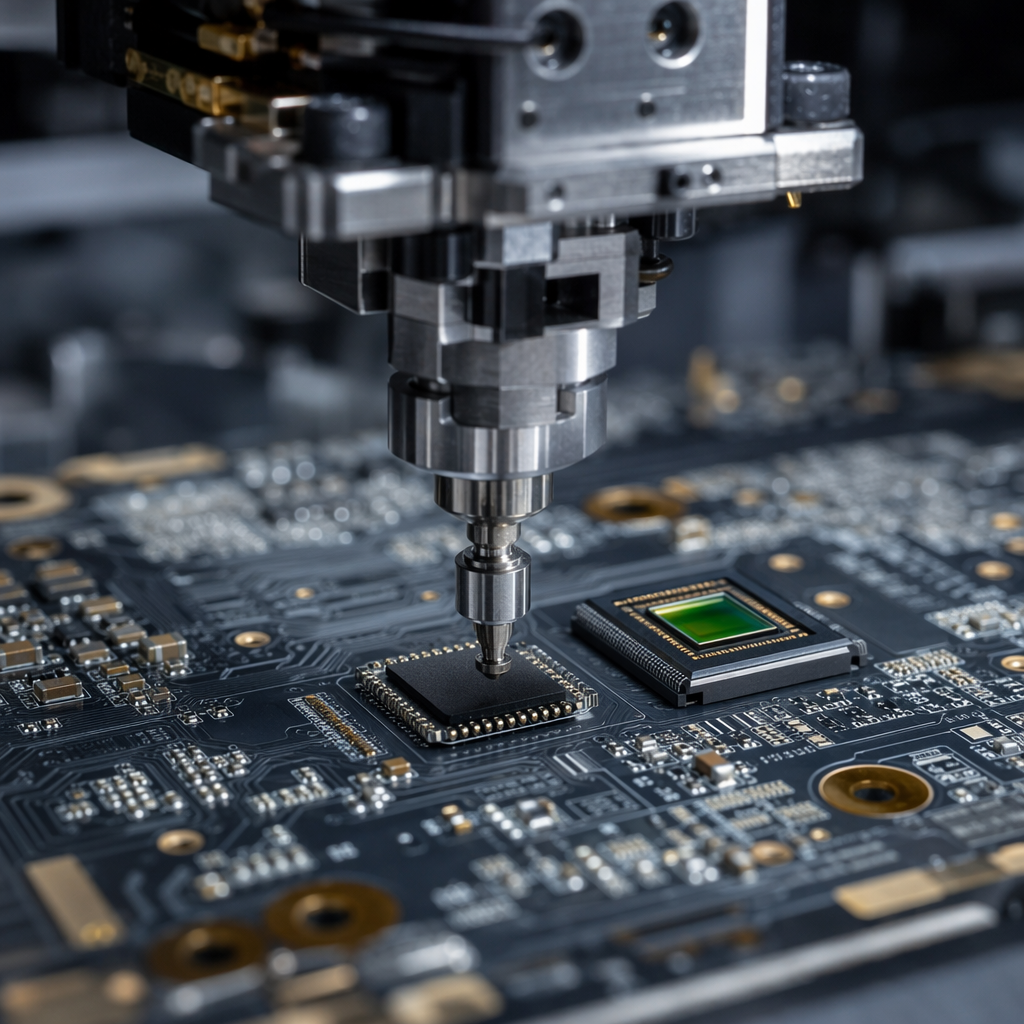
The heart of any security camera is its CMOS sensor. Unlike standard logic chips, image sensors are highly sensitive to particulate contamination and mechanical stress during the IPC module assembly process. When selecting an SMT mounter, the first criteria must be placement accuracy—typically ±25μm or better.
Modern PoE modules often utilize 0201 or even 01005 passive components to keep the footprint small enough for dome or bullet enclosures. This density requires a mounter with high-resolution vision systems that can verify the orientation of every tiny resistor before it touches the solder paste. Furthermore, the head of the mounter must have sophisticated vacuum control to prevent “micro-impacts” that could fracture the delicate silicon of an 8MP or 4K sensor.
Thermal Management: The PoE Reflow Paradox
PoE modules are unique because they combine low-power signal processing with high-power delivery (up to 90W in PoE++ systems). This creates a “thermal mass disparity” on the PCB. Large PoE transformers and power inductors absorb significant heat, while the tiny image sensor and surrounding passives reach reflow temperature almost instantly.
A standard reflow oven often fails here, leading to “cold joints” on the heavy transformers or “over-baked” sensors. To solve this, your SMT line requires a multi-zone nitrogen-reflow oven with at least 10 heating zones. Nitrogen (N2) environments are critical because they widen the process window, allowing for better wetting on large PoE components without oxidizing the delicate traces of the sensor module.
Inspection and Quality: The Role of 3D SPI and AOI
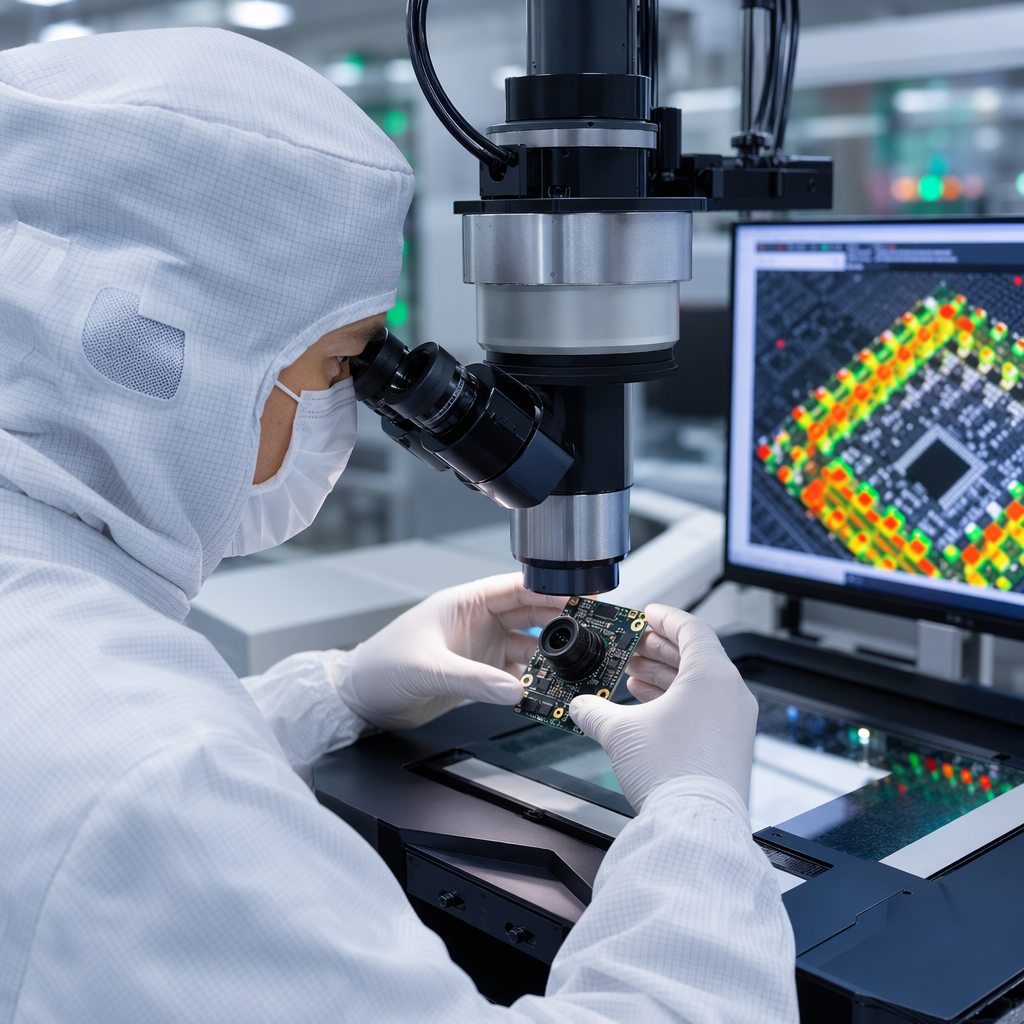
In the world of security manufacturing, a single failed unit in the field can cost ten times its assembly value in labor and logistics for a remote replacement. Therefore, the SMT production line must be integrated with a 3D Solder Paste Inspection (SPI) system at the front end.
3D SPI goes beyond 2D by measuring the actual volume of solder. For PoE power management ICs, which handle significant current, the volume of solder determines the electrical resistance and heat dissipation of the joint. At the back end, a 3D Automated Optical Inspection (AOI) system is non-negotiable. It must be capable of identifying “lifted leads” on high-pin-count image processors that 2D systems might miss due to shadowing from adjacent tall components like capacitors or PoE transformers.
Equipment Comparison: Selecting the Right Brand for Your Modules
When building a line for security modules, the choice often comes down to the balance between high-speed throughput and high-mix flexibility. Below is a comparison of top-tier SMT equipment brands often utilized in high-end IPC module assembly.
SMT Equipment Tier Comparison
| Feature | High-Speed Leader (Fuji/Panasonic) | High-Flexibility Specialist (Juki/Yamaha) | Precision Entry (NeoDen/Desktop) |
|---|---|---|---|
| Placement Accuracy | ±15μm – ±25μm | ±25μm – ±35μm | ±50μm |
| Ideal For | High-volume 2MP/4MP consumer cameras | Multi-functional PoE AI cameras | Prototyping and small-batch custom mods |
| Component Range | 01005 to 74mm sq | 0201 to 150mm (Large connectors) | 0402 to 30mm |
| ROI Period | 18 – 24 Months | 12 – 18 Months | < 12 Months |
| Recommendation | Use for massive global export projects. | Editor’s Choice for diversified PoE camera portfolios. | Best for R&D labs. |
Editor’s Choice Rationale: For PoE security camera system modules, Juki or Yamaha lines are often preferred. Their ability to handle large, heavy PoE components (connectors and transformers) on the same head that places tiny passives offers the best flexibility for evolving camera designs.
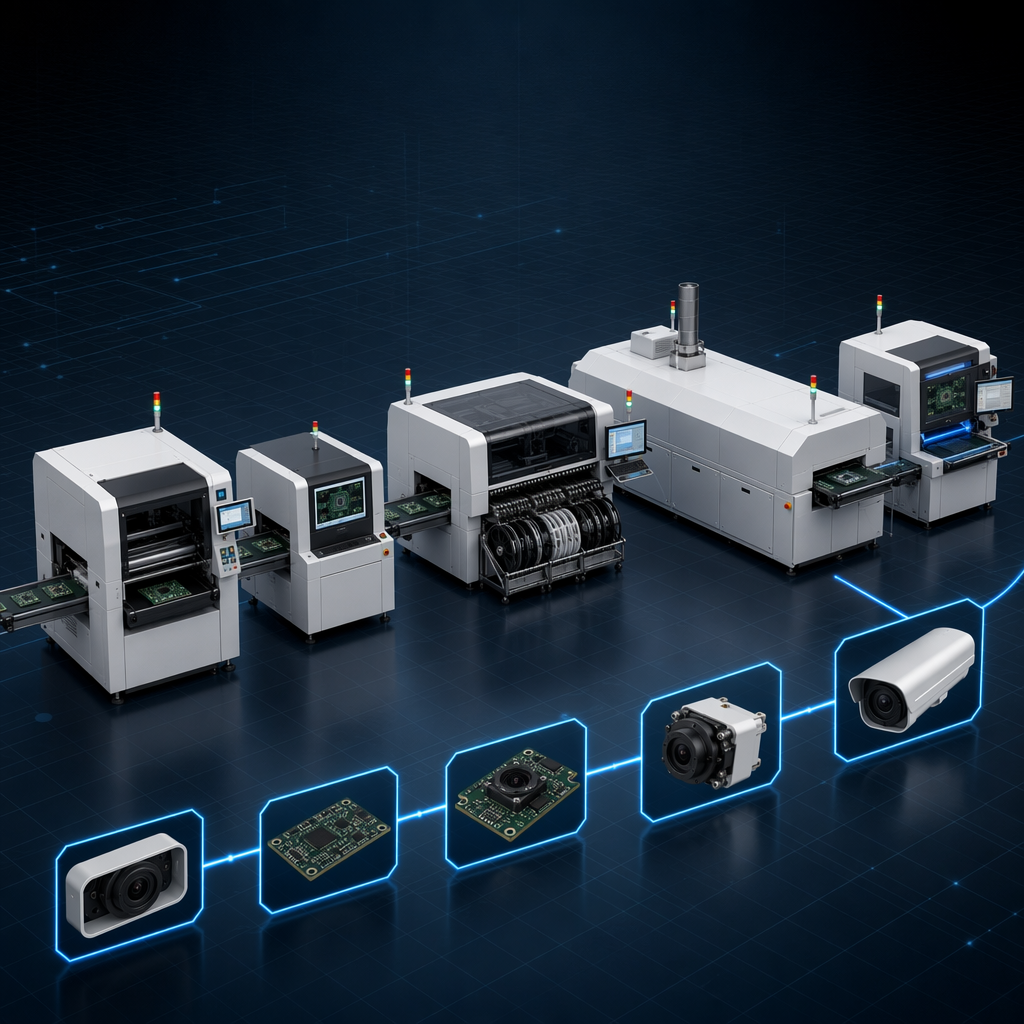
Advanced Process: Automated Thermal Gel Dispensing
A growing trend in PoE camera manufacturing is the integration of automated dispensing units directly into the SMT production line. Because PoE modules generate significant heat in enclosed spaces, thermal management cannot be an afterthought.
Instead of manual thermal pads, high-end lines use inline dispensers to apply thermal conductive gels directly onto the PoE power chips before the heat sink is attached. This ensures a bubble-free interface and significantly higher heat dissipation efficiency, which is critical for maintaining the image sensor’s signal-to-noise ratio in outdoor high-temperature environments.
Final Functional Handshake: End-of-Line Testing
The SMT process is not finished until the module can “talk” over Ethernet. Modern lines now include automated functional testers that perform a PoE “handshake” (802.3af/at/bt) immediately after AOI. This verifies that the power negotiation circuitry is functional before the module is ever mounted into its final housing.
Choosing the right SMT line for PoE security camera modules is a balancing act of precision, thermal control, and rigorous inspection. By prioritizing 3D inspection and specialized reflow profiles, manufacturers can ensure their modules survive the harsh realities of 24/7 surveillance operations.